
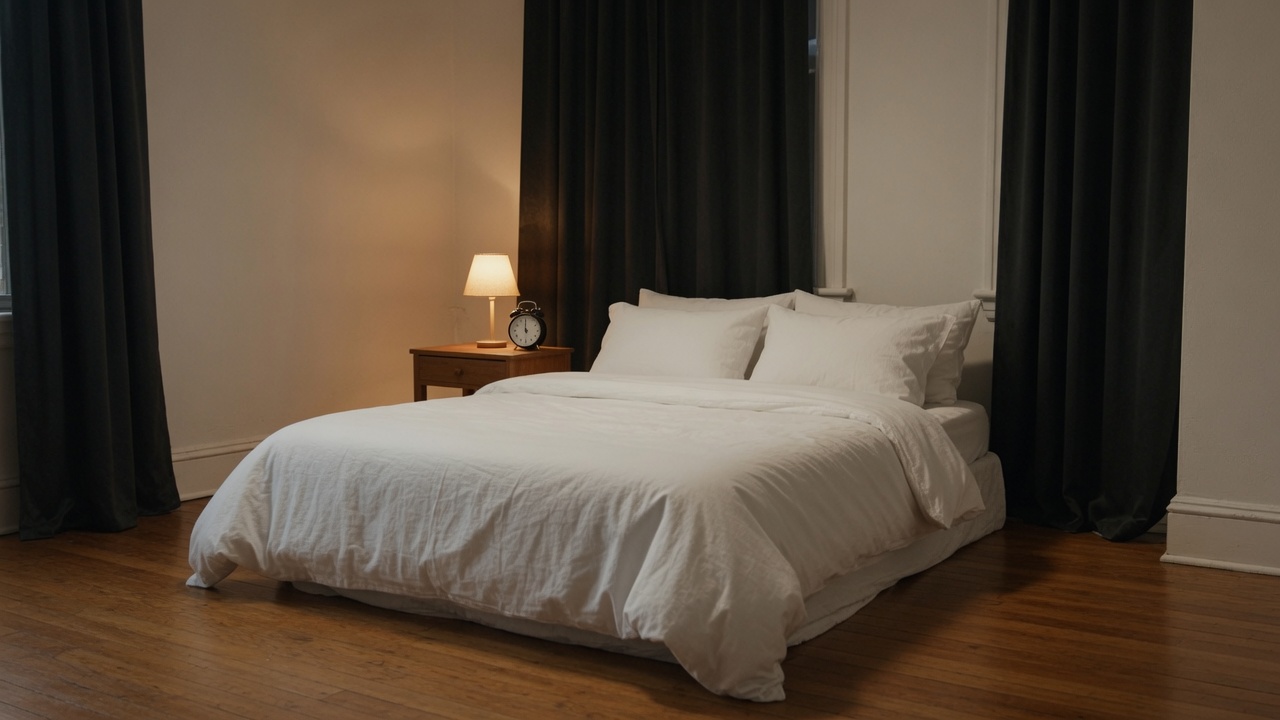
If you are trying to figure out how to sleep better, the internet can make the solution look unnecessarily complicated.
Buy a sleep tracker. Take a supplement. Stop looking at screens. Make your bedroom colder. Meditate. Wake up at sunrise.
Some of those ideas can help.
But better sleep usually does not come from finding one perfect trick. It comes from identifying what is actually interfering with your sleep and fixing the highest-impact problems first.
For many people, that means improving four areas:
- Sleep timing
- Light exposure
- Daytime habits
- What happens when you cannot sleep
And if the problem is persistent insomnia or an undiagnosed sleep disorder, generic “sleep hygiene” may not be enough at all.
HQ Quick Trick: Do not change ten sleep habits tonight. Find the one or two factors most likely to be hurting your sleep, change them consistently, and watch what happens.
First: Are You Getting Enough Time to Sleep?
Before optimizing sleep quality, make sure you are giving yourself enough opportunity to sleep.
The CDC says adults ages 18–60 generally need at least seven hours of sleep per night, while individual needs vary with age and other factors.
That creates an obvious problem that no sleep hack can solve.
If you need to wake at 6:30 a.m. but routinely stay awake until 1:00 a.m., your first problem may not be sleep quality.
It may simply be that you are not allowing enough time for sleep.
Start by working backward from the time you actually need to wake.
Then protect enough time for sleep before trying to optimize everything else.
Understand the Two Forces Behind Sleep
You do not need a neuroscience degree to improve your sleep, but understanding two basic systems makes many sleep recommendations easier to understand.
Sleep Pressure
The longer you stay awake, the stronger your biological drive to sleep generally becomes.
That is one reason naps, sleeping late and spending excessive time in bed can sometimes make it harder to fall asleep at your desired time.
Caffeine also interacts with this system by blocking adenosine signaling, which is involved in the buildup of sleep pressure.
Your Circadian Rhythm
Your circadian rhythm is your internal roughly 24-hour timing system.
It influences when you naturally become:
- Alert
- Sleepy
- Hungry
- Physically ready for sleep
Light is one of the strongest environmental signals affecting this clock.
That is why the timing of light exposure—especially daylight earlier in your waking period and bright artificial light late at night—can influence sleep timing.
You are therefore trying to line up two things:
Enough sleep pressure + the right biological time for sleep.
Start With a Consistent Wake Time
One of the simplest ways to stabilize sleep is to make your schedule more predictable.
Try to wake at approximately the same time each day, including days when you do not have work or other obligations.
This does not mean you can never sleep later.
It means large and frequent shifts between weekdays and weekends can make your body’s timing less predictable.
If your current schedule is chaotic, concentrate first on creating a reliable wake time rather than forcing yourself into bed when you are not sleepy.
Then give your bedtime room to stabilize around it.
If your mornings are also disorganized, our guide to building a healthy morning routine using AI can help you design a realistic routine around your actual schedule rather than an unrealistic productivity checklist.
Get Daylight Earlier in Your Day
Daylight helps reinforce your body’s daytime signal.
The CDC recommends getting natural light, particularly earlier in the day, as part of healthy sleep habits.
You do not need to turn this into a complicated ritual.
A simple approach is:
Get outside after waking when practical.
Walk outside at breakfast or lunchtime.
Open curtains and spend time in brighter areas during the day.
If you work indoors for most of the day, making outdoor light a deliberate part of your routine can be particularly useful.
HQ Quick Trick: Pair daylight with something you already do—morning coffee, walking the dog or a short walk after breakfast—so it does not become another habit you need to remember.
Make Your Evenings Less Stimulating
The goal before bed is not to create a perfect spa routine.
It is to stop feeding your brain reasons to remain highly alert.
That can mean reducing:
- Work email
- Arguments
- Highly stimulating games
- Endless social-media feeds
- Bright screens close to your face
- Stressful news
- Complicated work tasks
Screens are not only a light problem.
They are also a behavior problem.
A phone gives you an unlimited supply of emotionally stimulating information at exactly the time you are trying to disengage from the day.
If putting the phone completely outside the bedroom is unrealistic, try something simpler:
Create a charging location away from the bed.
Use Do Not Disturb.
Remove highly stimulating apps from the home screen.
Stop treating the bed as a place for scrolling.
Build a Wind-Down Cue
Your brain benefits from predictable transitions.
Choose a few calm activities that repeatedly happen before sleep.
Examples can include:
- Reading
- Quiet music
- A warm shower
- Light stretching
- Preparing things for tomorrow
- Relaxation exercises
The exact activity matters less than whether it reliably reduces stimulation.
Do not turn your wind-down routine into another 12-step self-improvement project.
Twenty minutes of something calm that you actually repeat is more useful than a sophisticated routine you abandon after four days.
Stress and Sleep Can Reinforce Each Other
Stress makes sleep more difficult.
Poor sleep can then make emotional regulation harder the following day.
This can create an unpleasant loop:
Stress → poor sleep → more fatigue and emotional reactivity → more stress → poorer sleep
If your mind becomes most active when the room finally becomes quiet, the sleep problem may partly be a stress-management problem.
Try separating “thinking time” from bedtime.
Earlier in the evening, write down:
- What is worrying you
- What needs action tomorrow
- What can wait
- The next concrete step for unresolved tasks
You are not trying to solve your entire life on paper.
You are giving unfinished thoughts somewhere to go other than your pillow.
If stress is a major part of your sleep problem, our evidence-based guide to reducing stress and anxiety goes deeper into the approaches worth prioritizing.
Treat Caffeine as a Timing Problem
Caffeine affects people differently.
Genetics, dose, tolerance and timing all matter.
Rather than following a universal rule such as “never drink coffee after exactly 2 p.m.,” pay attention to the relationship between your caffeine use and your bedtime.
The CDC and NHLBI recommend avoiding caffeine later in the day or close to bedtime when it interferes with sleep.
If you have difficulty falling asleep, experiment with moving your last caffeinated drink earlier.
Remember that caffeine is not limited to coffee.
It can also appear in:
- Tea
- Energy drinks
- Cola
- Pre-workout products
- Chocolate
- Some medications
Change the timing before deciding that caffeine has no effect on you.
Alcohol Is Not a Sleep Shortcut
Alcohol can make some people feel sleepy.
That does not mean it reliably improves sleep quality.
NHLBI notes that although alcohol can make falling asleep easier for some people, it can contribute to lighter sleep and more waking during the night.
That makes alcohol a poor tool for fixing sleep.
If you notice that you fall asleep quickly after drinking but wake repeatedly or feel poorly rested the next morning, the two may be connected.
Exercise Helps—But You Do Not Need a Perfect Workout
Regular physical activity supports healthy sleep and provides many other benefits.
You do not need an elaborate gym program to gain those benefits.
Walking, cycling, swimming and resistance exercise can all contribute.
The important part is consistency.
If vigorous exercise very close to bedtime leaves you feeling wired, move it earlier.
If evening exercise does not disrupt your sleep, you do not necessarily need to abandon a schedule that works for you.
For anyone currently inactive, our home workout routine for beginners provides a practical starting point without requiring gym equipment.
Make Your Bedroom Boring—in a Good Way
A good sleep environment removes obstacles rather than adding technology.
Aim for a room that is:
- Dark
- Quiet
- Comfortable
- Cool enough for you to sleep comfortably
There is no universal perfect bedroom temperature that every person must use.
Personal comfort, bedding, climate and individual differences matter.
Instead of chasing a specific number, ask whether heat or cold regularly wakes you or makes it difficult to fall asleep.
Address obvious problems first.
Blackout curtains, earplugs, reducing unexpected noise or adjusting bedding can sometimes matter more than expensive sleep technology.
Use the Bed Mainly for Sleep
Your brain learns associations.
If your bed becomes the place where you:
- Work
- Scroll
- Watch hours of television
- Worry
- Answer email
then getting into bed does not strongly predict sleep.
This idea is an important part of stimulus control, one component used in behavioral treatment for insomnia.
When possible, keep work and highly stimulating activities elsewhere.
And if you are lying awake becoming increasingly frustrated, do not force yourself to “try harder” to sleep.
Get out of bed temporarily.
Do something quiet in low light.
Return when you feel sleepy again.
The goal is to weaken the connection between:
Bed = awake and frustrated
and strengthen:
Bed = sleep.
Stop Watching the Clock
Checking the time repeatedly can turn a bad night into an anxiety exercise.
It often sounds like this:
“It’s 1:07. If I fall asleep now, I can get five hours and twenty-three minutes.”
Then:
“It’s 1:36. Tomorrow is ruined.”
The calculation itself increases pressure.
If this is familiar, turn the clock away and stop checking your phone for the time.
Sleep is one of the few things that usually becomes harder when you aggressively try to force it.
Naps Can Help—or Make the Problem Harder
Naps are not inherently bad.
They can be useful when you are genuinely sleep-deprived.
But long or late naps can reduce the sleep pressure available at bedtime.
If you regularly cannot fall asleep at night and also nap for long periods during the day, experiment with reducing or moving the naps earlier.
Your goal is not to eliminate every nap forever.
It is to see whether daytime sleep is competing with the sleep you want at night.
Do Not Start With Supplements
The sleep-supplement industry makes poor sleep look like a missing-ingredient problem.
Often it is not.
Before buying another bottle, fix the basics:
- Enough time for sleep
- Consistent schedule
- Light exposure
- Caffeine timing
- Bedroom environment
- Stress
- Exercise
- Stimulus control
Dietary supplements can also interact with medications and are not regulated in the same way as approved medicines.
If you are considering melatonin or another sleep supplement—especially if you take medications, are pregnant, have a medical condition or are considering it for a child—discuss it with an appropriate healthcare professional.
A supplement should not delay evaluation of an actual sleep disorder.
Sleep Trackers Are Feedback Tools, Not Sleep Studies
Wearable devices can estimate:
- Sleep duration
- Heart rate
- Movement
- Sleep timing
- Sleep stages
- Recovery scores
They can be useful for noticing trends.
For example:
“I consistently sleep less when I work late.”
That can lead to a useful behavior change.
But consumer wearables are not equivalent to a clinical sleep study.
Do not make medical conclusions from a watch telling you that you had a certain amount of “deep sleep.”
And watch for another problem:
sleep-score anxiety.
If you wake feeling fine, look at a poor sleep score and suddenly decide you must feel terrible, the tracking may be hurting more than helping.
Our health and fitness wearables guide explains what wearable data is genuinely useful and where the limitations become important.
Create a Two-Week Sleep Experiment
Do not rebuild your entire routine overnight.
For the next two weeks, concentrate on a small number of changes.
Days 1–7: Establish the Foundation
Choose a realistic wake time.
Get daylight earlier in the day.
Give yourself enough time for sleep.
Move caffeine earlier if necessary.
Reduce stimulating activities shortly before bed.
Days 8–14: Fix Friction
Now examine what is still going wrong.
Is your bedroom too noisy?
Are you staying in bed awake for long periods?
Does stress spike when you stop working?
Are long naps reducing nighttime sleepiness?
Is late alcohol affecting the second half of your night?
Change the biggest remaining issue.
Keep a Simple Sleep Diary
You do not need a wearable.
A basic sleep diary can be more useful.
Record:
- Approximate bedtime
- Approximate time you fell asleep
- Nighttime awakenings
- Wake time
- Naps
- Caffeine timing
- Alcohol
- Exercise
- How rested you felt the next day
Do not obsess over minute-by-minute accuracy.
You are looking for patterns.
NHLBI specifically notes that healthcare providers may use a sleep diary to better understand insomnia and the habits that influence it.
Do Not Judge the Experiment by One Night
Sleep naturally varies.
A bad night does not mean a strategy failed.
A great night does not prove that yesterday’s herbal tea cured your sleep.
Look at patterns across several nights.
Useful questions include:
Am I falling asleep more easily?
Am I waking less often?
Am I getting enough total sleep?
Do I feel more functional during the day?
Those trends matter more than a single score.
When “Better Sleep Habits” Are Not Enough
This is where many online sleep guides fail.
They assume every sleep problem can be solved with better habits.
That is not true.
The American Academy of Sleep Medicine recommends Cognitive Behavioral Therapy for Insomnia (CBT-I) as a first-line behavioral treatment for chronic insomnia. Importantly, AASM does not recommend relying on sleep hygiene alone as the only treatment for chronic insomnia.
That distinction matters.
You can have an excellent bedroom, avoid caffeine and follow a routine—and still have clinical insomnia that needs appropriate treatment.
What Is Chronic Insomnia?
NHLBI describes chronic insomnia as difficulty falling asleep, staying asleep or getting good-quality sleep occurring at least three nights per week and lasting three months or longer, despite having adequate opportunity for sleep.
If that sounds like your situation, stop endlessly adding more sleep hacks.
Talk with a healthcare professional or a clinician trained in sleep medicine or CBT-I.
You can read more about the clinical distinction in the NHLBI insomnia guide.
Watch for Sleep Apnea
Another reason “sleep hygiene” sometimes fails is that the problem is not sleep hygiene.
Obstructive sleep apnea repeatedly interferes with breathing during sleep.
Possible warning signs include:
- Loud frequent snoring
- Breathing that stops and starts
- Gasping during sleep
- Significant daytime sleepiness
- Morning headaches
- Waking frequently during the night
Not everyone with sleep apnea fits the same body type or demographic.
If you or someone sleeping near you notices breathing pauses, gasping or persistent loud snoring—particularly alongside significant daytime sleepiness—talk with a healthcare professional.
A sleep study may be needed for diagnosis.
NHLBI provides more information about sleep apnea symptoms and diagnosis.
Other Reasons to Seek Medical Advice
Consider discussing sleep with a healthcare professional if you regularly experience:
- Persistent insomnia
- Severe daytime sleepiness
- Falling asleep unintentionally
- Loud snoring with breathing interruptions
- Uncomfortable sensations in the legs that interfere with sleep
- Unusual movements or behaviors during sleep
- Sleep problems that significantly affect work, driving or daily life
Do not try to fix potentially serious sleep disorders with supplements and apps alone.
The HQTrick Sleep Troubleshooting Method
If your sleep is not where you want it to be, work through the problem in this order.
1. Opportunity
Are you giving yourself enough time to sleep?
If not, fix that first.
2. Schedule
Are your sleep and wake times changing dramatically from day to day?
Make them more consistent where your responsibilities allow.
3. Daytime Signals
Are you getting daylight and physical activity?
Are long naps interfering with nighttime sleep?
4. Stimulants
Could caffeine, nicotine or another stimulant be affecting your evening?
5. Evening Behavior
Are work, stress or your phone keeping your brain activated?
6. Environment
Is the room dark, quiet and comfortable?
7. The Bed Itself
Are you spending long periods awake and frustrated in bed?
8. Medical Causes
Are there signs of insomnia, sleep apnea or another sleep disorder?
This approach prevents you from spending money on the seventh solution before checking the first problem.
Frequently Asked Questions
How can I sleep better naturally?
Start with enough time for sleep, a consistent schedule, daylight earlier in the day, regular physical activity, appropriate caffeine timing and a dark, quiet, comfortable bedroom.
If sleep problems remain persistent, behavioral treatment or medical assessment may be more appropriate than adding more lifestyle tips.
How many hours of sleep do adults need?
The CDC recommends at least seven hours for adults ages 18–60. Sleep needs vary with age and between individuals.
Quality and consistency matter as well as duration.
What should I do if I cannot fall asleep?
Avoid turning the bed into a place where you remain awake and frustrated for long periods.
If you are clearly awake and becoming frustrated, leave the bed temporarily, do something quiet in low light and return when sleepy.
Persistent difficulty falling asleep deserves further evaluation.
Does exercise help sleep?
Regular physical activity can support healthy sleep.
If vigorous exercise close to bedtime seems to keep you awake, move it earlier and compare how you respond.
Is alcohol good for sleep?
Alcohol may make you feel sleepy initially, but it can contribute to lighter and more disrupted sleep later in the night.
It should not be treated as a sleep aid.
Do sleep trackers accurately measure deep sleep?
Consumer wearables estimate sleep stages using signals such as movement and heart rate.
They can be useful for trends but are not equivalent to clinical polysomnography.
Is melatonin the best solution for insomnia?
Not necessarily.
Melatonin is not a universal treatment for poor sleep, and chronic insomnia has better-established behavioral treatments such as CBT-I.
Discuss supplement use with an appropriate healthcare professional when needed.
When should I see a doctor about sleep?
Seek professional advice when sleep problems are persistent, significantly affect daytime function, or are accompanied by signs such as loud snoring, breathing pauses, gasping or severe daytime sleepiness.
Final Verdict
Learning how to sleep better is mostly about removing the things that keep normal sleep from happening.
Start with enough sleep opportunity.
Keep your schedule reasonably consistent.
Get daylight and movement during the day.
Pay attention to caffeine and alcohol.
Reduce unnecessary stimulation before bed.
Make your bedroom comfortable.
And stop treating one bad night as an emergency.
If stress is a major obstacle, combine these changes with the strategies in our stress and anxiety guide.
If exercise is missing from your routine, start simply with our beginner home workout guide.
If you use wearable data to monitor sleep, read our health and fitness wearables guide before treating any sleep score as a medical measurement.
And if waking consistently is the bigger problem, our healthy morning routine guide can help turn your wake time into a repeatable daily anchor.
Most importantly, recognize when the problem has moved beyond ordinary sleep habits.
Chronic insomnia and sleep disorders deserve proper treatment—not increasingly complicated bedtime hacks.
The HQTrick rule: fix the sleep system before buying another sleep solution.