
Best Cordless Tools for DIY Home Improvement in 2026 (The Honest Ranking)
The cordless tool market in 2026 has three tiers that are genuinely distinct from one another: a professional tier (Milwaukee, DeWalt, Makita) where tools are expensive but built for daily commercial use, a mid-range tier where serious DIYers live (Ryobi, Ridgid, newer Bosch lines), and a budget tier that occasionally surprises and frequently disappoints.
This guide is written for homeowners who do their own home improvement work — not professional contractors. The recommendations reflect that: tools that will be used weekly rather than daily, that need to handle typical home projects reliably, and that represent genuine value over a 10+ year ownership window.
The Battery Ecosystem Decision (Make This First)
The single most important tool-buying decision isn’t which brand to choose — it’s committing to one brand’s battery platform before buying anything else.
Every major tool brand uses proprietary batteries that work only with their tools. A DeWalt 20V MAX battery won’t power a Milwaukee M18 tool and vice versa. Once you own two or three tools from a platform, switching means replacing all of them.
Platform recommendations by use case:
Ryobi ONE+ (18V): The best platform for most homeowners. The widest range of tools using a single battery (over 300 products), the most affordable entry point, and quality that handles typical DIY projects reliably. The tools won’t last as long under daily professional use, but for weekend use, many Ryobi owners report 10+ years of reliable service.
DeWalt 20V MAX / FLEXVOLT: The standard step up from Ryobi. Noticeably better build quality, longer run times, and more torque. The platform bridges consumer and professional tiers — tools that can handle daily use if needed. Higher price point but worth it if you’re doing substantial work (deck building, framing, renovation).
Milwaukee M18: The platform preferred by professional tradespeople. Best-in-class build quality and the most complete professional tool ecosystem. Price premium over DeWalt is modest; difference in heavy-use durability is real. For a homeowner: probably more tool than you need, but an excellent investment if you do serious work and plan to own tools for 20+ years.
The Build Order: What to Buy First
Tool 1: Cordless Drill/Driver ($70–$150)
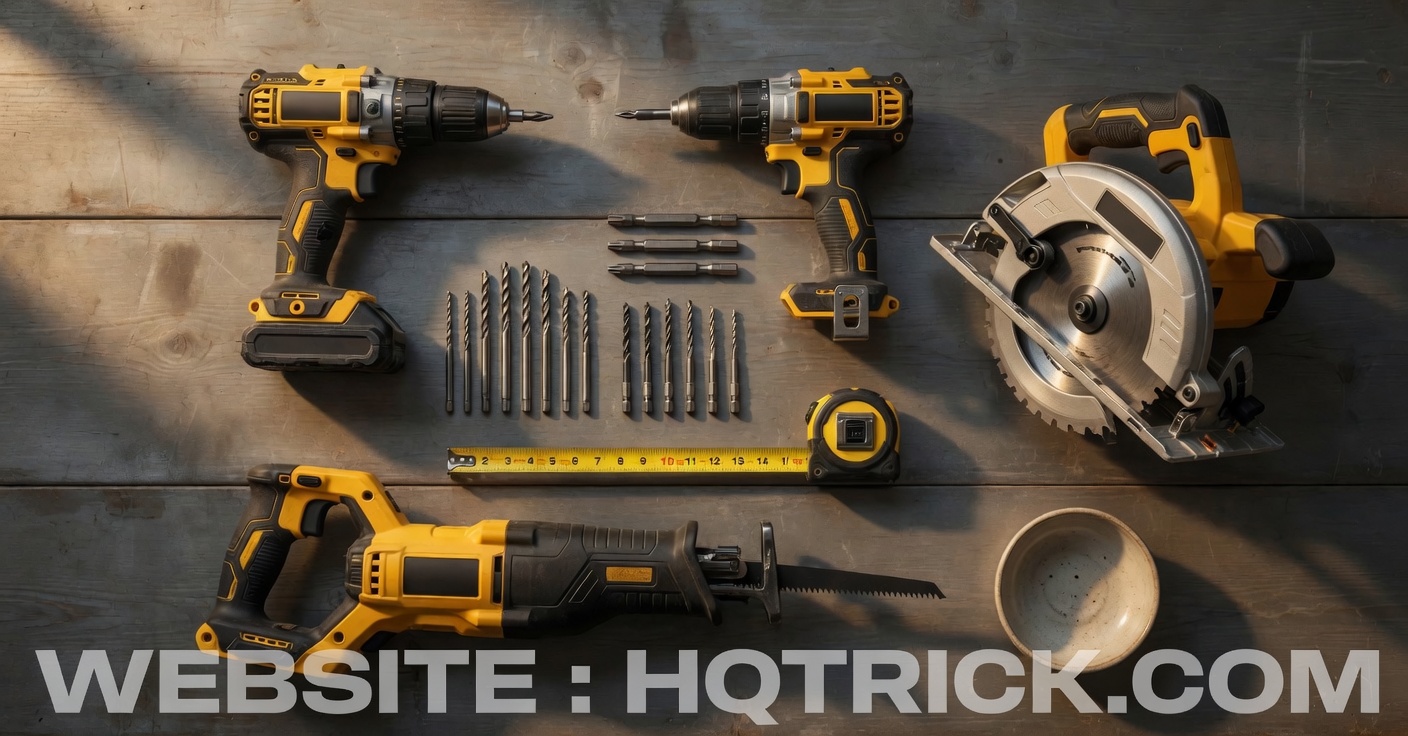
The foundational tool. If you own only one cordless tool, this is it. A drill/driver handles: driving screws into wood and drywall, drilling holes in wood, metal, and masonry (with appropriate bits), assembling furniture, and installing hardware.
Best value pick: Ryobi PCL206K1 (18V ONE+ system) — $99 with one battery and charger. Handles everything a homeowner needs and introduces you to the Ryobi ecosystem at a sensible entry price.
Step-up pick: DeWalt DCD771C2 — $119 with two batteries. The extra battery is worth having; run time is a frequent frustration with single-battery kits.
Tool 2: Cordless Impact Driver ($70–$150)
Not the same as a drill. An impact driver is optimized specifically for driving fasteners — long deck screws, lag bolts, self-tapping screws — using a rotational hammering mechanism that prevents cam-out (the screw head stripping) and reduces wrist fatigue dramatically. Once you’ve used an impact driver for deck work or any heavy fastener driving, you won’t go back to using a drill for the same task.
Buy same platform as your drill — you’ll share batteries.
Tool 3: Circular Saw ($90–$200)
A circular saw opens up the full range of DIY carpentry: cutting lumber to length, trimming doors and decking boards, ripping plywood sheets. The saw itself matters less than the blade — a decent saw with a sharp, quality blade outperforms an expensive saw with a dull one. Budget $15–$25 for a quality 7¼-inch blade upgrade from whatever comes in the box.
Tool 4: Random Orbital Sander ($50–$120)
Sanding by hand is slow, uneven, and ineffective compared to a random orbital sander running 150-grit paper. Used for: prepping wood surfaces before staining or painting, smoothing wood filler and putty repairs, removing paint from detail surfaces.
The random orbital motion (circular + back-and-forth simultaneously) prevents the swirl marks that orbital-only sanders leave. This detail matters when you’re finishing a visible surface.
Tool 5: Reciprocating Saw ($80–$200)
The tool you won’t need until you need it urgently. A reciprocating saw cuts through wood, metal, PVC, nails, and almost anything else using a back-and-forth blade action. Essential for demolition: cutting out a section of wall, removing old pipe, cutting off a damaged joist. Also useful for cutting in tight spaces where no other saw fits.
The Tools Worth Waiting On
Miter saw: Extremely useful for finish carpentry and trim work. Not a first purchase — get the above five tools and identify whether you’re actually doing trim work before spending $200–$450.
Jigsaw: Useful for curved cuts and tight spaces. Worth adding to your collection eventually; not a priority for most home improvement projects.
Router: Only relevant if you’re doing furniture building or detailed woodworking. Skip until you know you need it.
The Cheap Tool Trap
The most expensive tool decision is buying an under-powered or poorly made tool for a job it can’t reliably perform, and then having to buy a second, quality tool anyway. In cordless tools, this is common in the circular saw category — budget saws often struggle with anything thicker than dimensional lumber and produce cuts that require significant cleanup.
The guidance: for hand tools and non-powered accessories (hammers, levels, squares, clamps), mid-range is usually fine. For cordless power tools, the price/quality relationship is real and worth respecting.
Ready to put these tools to work? See [10 Weekend DIY Projects That Add Real Value to Your Home] for the projects that make best use of this toolkit.