
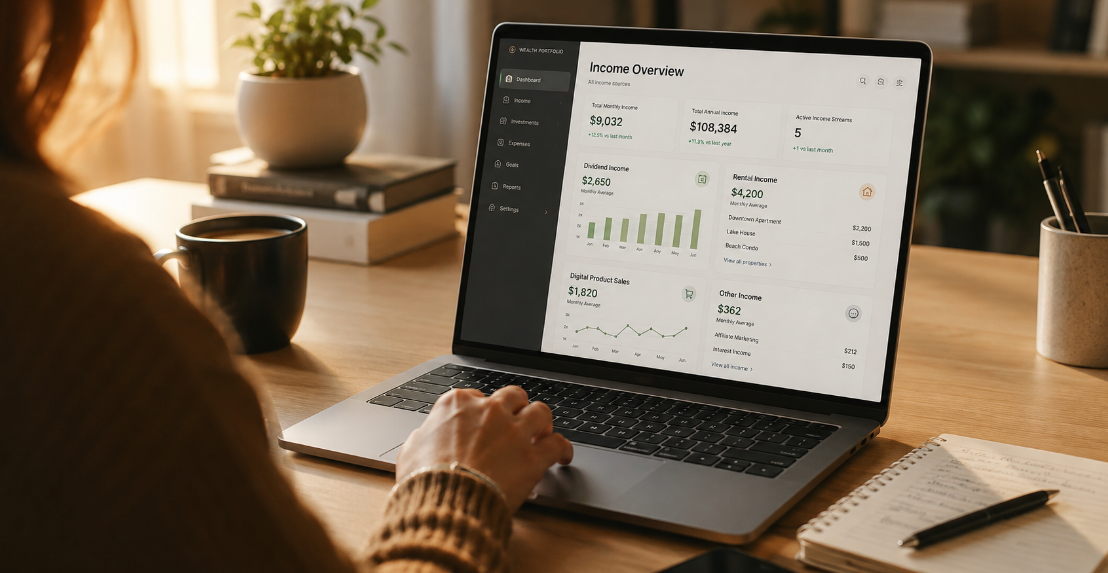
How to Build Passive Income Streams That Actually Work
“Passive income” is the most searched and most lied-about topic in personal finance.
Here’s the honest version — what actually works, what it really pays, and what it costs to build.
First: The Truth About Passive Income Nobody Sells You
Every passive income stream requires an upfront investment. There are exactly two currencies you can pay with:
Money. Dividend stocks, REITs, and bonds generate truly passive income — but only proportional to the capital you invest. $10,000 in dividend stocks yields roughly $300–$400 per year. Meaningful passive income from investments requires meaningful invested capital.
Time. Digital products, content, and online assets can generate income with minimal capital — but require dozens or hundreds of hours of upfront work before the first dollar arrives, plus ongoing maintenance that “passive” marketing conveniently omits.
The scams and the disappointments all come from the same false promise: significant income without significant investment of either. That combination doesn’t exist.
What does exist: streams where the upfront investment — of money or time — continues paying long after the work is done. Those are worth building. Here they are, ranked by how realistic they are for a normal person.
Second: The Passive Income Streams Ranked by Realism
Tier 1 — Truly Passive (Money Upfront)
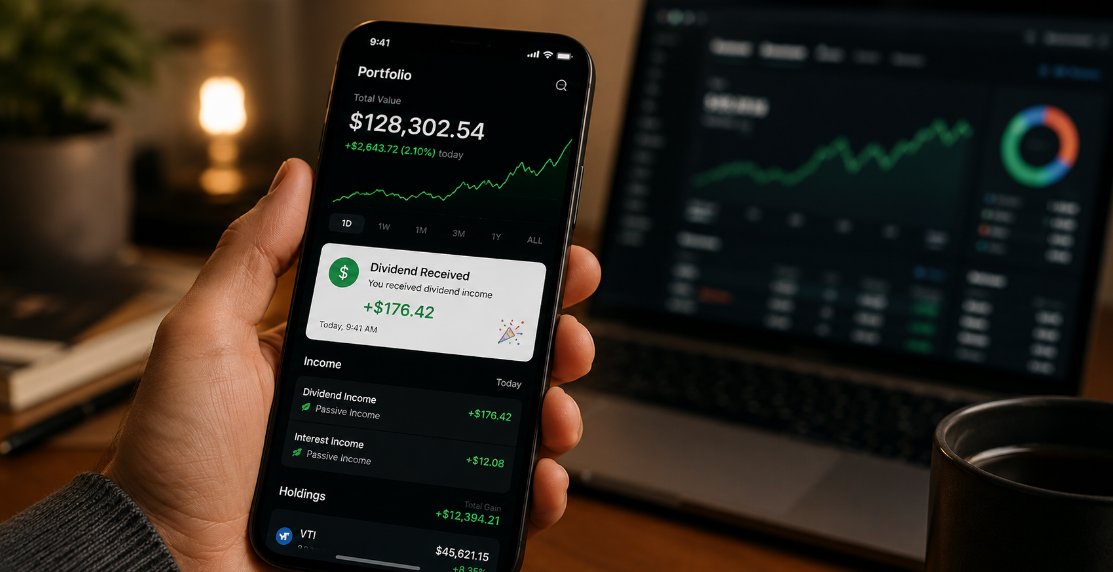
Dividend Stock Portfolios Realistic income: 2–4% annual yield Upfront cost: Capital (income scales with investment) Time to first income: Immediate (first quarterly dividend)
Companies that share profits with shareholders through quarterly dividend payments. A portfolio of dividend ETFs like SCHD (Schwab US Dividend Equity) or VYM (Vanguard High Dividend Yield) pays you every quarter for owning it — no work required, ever.
The honest math: $100,000 invested at a 3.5% yield produces $3,500/year. Real money — but built on real capital. The strategy is to reinvest dividends for years, letting the income snowball, then live on it later.
REITs (Real Estate Investment Trusts) Realistic income: 3–5% annual yield Upfront cost: Capital Time to first income: Immediate
Real estate income without owning property. VNQ pays quarterly distributions from hundreds of income-producing properties. As passive as income gets.
High-Yield Savings and Treasury Bills Realistic income: 4–5% currently Upfront cost: Capital Time to first income: First month
Not glamorous — but a high-yield savings account or T-bills currently pay 4–5% with zero risk to principal (T-bills are government-backed). For emergency funds and short-term money, this is passive income hiding in plain sight.
Tier 2 — Passive After the Work (Time Upfront)
Digital Products (Courses, Ebooks, Templates) Realistic income: $100–$5,000+/month (wide range) Upfront cost: 50–300 hours of creation Time to first income: 2–6 months
Create once, sell endlessly. A course on a skill you genuinely have, an ebook solving a specific problem, Notion templates, spreadsheet tools, design assets — digital products have zero marginal cost per sale.
The honest reality: most digital products earn very little because they’re built before validating demand. The ones that succeed solve a specific problem for a specific audience the creator understands deeply.
Content That Earns (Blog, YouTube, Niche Sites) Realistic income: $0–$10,000+/month (extremely wide) Upfront cost: 6–24 months of consistent content Time to first income: 6–12 months typically
Ad revenue, affiliate commissions, and sponsorships on content that ranks in search or builds an audience. This is the longest game on the list — most sites earn almost nothing for the first year — but established content assets can pay for years with light maintenance.
Print-on-Demand and Stock Assets Realistic income: $50–$500/month typically Upfront cost: Design/creation time Time to first income: 1–3 months
Designs on merchandise, stock photos, stock music — platforms handle production and delivery. Income per asset is small; creators who succeed build large catalogs over time.
Tier 3 — “Passive” That Isn’t Really
Rental Property (Self-Managed) Real income, real appreciation — but tenants, repairs, and vacancies make this a part-time job, not passive income. With a property manager (8–10% of rent), it becomes semi-passive at reduced margin.
Dropshipping and E-commerce Marketed as passive relentlessly. In reality: customer service, supplier issues, ad management, and constant competition. It’s a business — potentially a good one — but nobody running one calls it passive.
“Passive income apps” and get-paid-to platforms Surveys, cashback apps, selling attention — these pay cents per hour. Not passive, not income worth the name.
Third: The Comparison Table
| Stream | Upfront | Monthly Income (realistic) | Truly Passive? |
|---|---|---|---|
| Dividend ETFs | $10k+ capital | $25–35 per $10k | ✅ Yes |
| REITs | Any capital | $30–40 per $10k | ✅ Yes |
| T-Bills / HYSA | Any capital | $35–40 per $10k | ✅ Yes |
| Digital products | 50–300 hours | $100–$5,000 | ✅ After launch |
| Content / niche site | 6–24 months | $0–$10,000 | ⚠️ Needs upkeep |
| Print-on-demand | Design time | $50–$500 | ✅ Mostly |
| Rental (self-managed) | Down payment | $200–$500/unit | ❌ It’s a job |
| Dropshipping | $500–$5,000 | Highly variable | ❌ It’s a business |
Fourth: The Digital Product Path — Step by Step
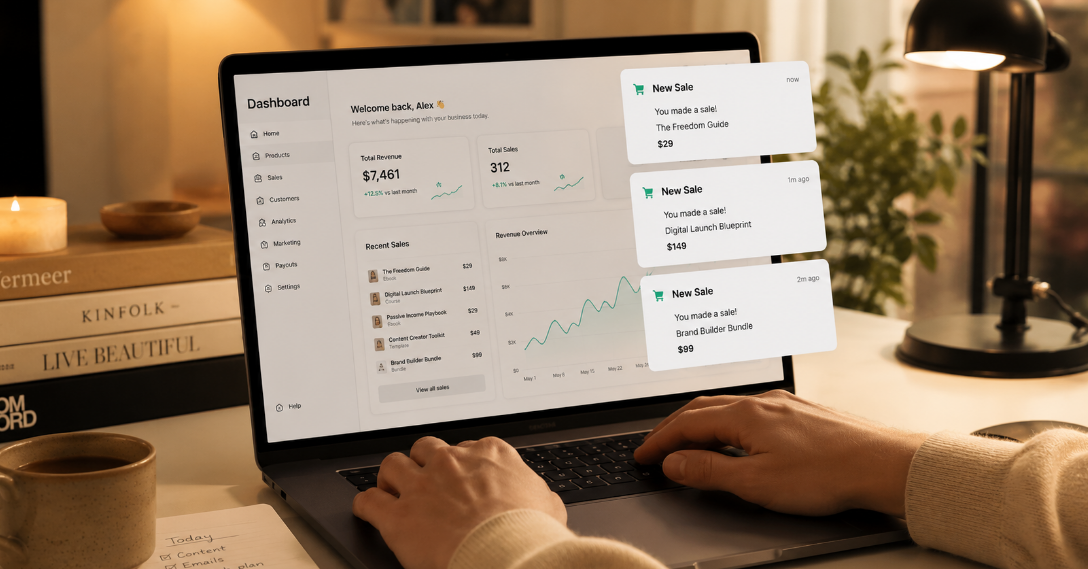
For someone with more time than capital, digital products are the most accessible starting point. The sequence that separates products that sell from products that sit:
Step 1 — Find the problem you’re qualified to solve. Not “what can I make?” but “what do people already ask me for help with?” Your unfair advantage is knowledge you have that a specific group wants.
Step 2 — Validate before building. Describe the product to 10 people in your target audience before creating it. Pre-sell it if possible. A product with 5 pre-orders deserves your 100 hours. A product with zero interest doesn’t.
Step 3 — Build the minimum excellent version. Not minimum viable — minimum excellent. A short course that transforms one specific skill beats a bloated course that covers everything shallowly.
Step 4 — Choose the platform. Gumroad (simplest), Teachable or Podia (courses), Etsy (templates and printables). Platform fees of 5–10% are the cost of not building infrastructure.
Step 5 — Build the discovery engine. Products don’t sell themselves — they’re sold by content that attracts the right audience: SEO articles, YouTube videos, or social content that solves adjacent problems free and points to the product.
Fifth: Frequently Asked Questions
How much money do I need to start earning passive income?
You can start with $10. Fractional shares of dividend ETFs pay proportional dividends from the first dollar. The income is tiny at first — the point is starting the compounding engine, not the first month’s payout. With time instead of money, digital products can start from zero capital.
What is the best passive income stream for beginners?
For most beginners: a dividend ETF like SCHD inside a Roth IRA. It requires no skill, no maintenance, and teaches you how passive income compounds. For beginners with time and a marketable skill: one small digital product, validated before building.
How long does it take to make $1,000 a month passively?
With capital: roughly $300,000–$400,000 invested at a 3–4% yield. With time: a successful digital product or content site can reach $1,000/month in 1–3 years of consistent work — though most attempts earn less. Anyone promising $1,000/month quickly is selling something.
Is passive income taxed?
Yes. Dividends, interest, rental income, and digital product sales are all taxable — though rates differ. Qualified dividends are taxed at lower capital gains rates. Digital product income is ordinary income (plus self-employment tax in the US). Holding dividend investments inside a Roth IRA makes the income tax-free.
Can passive income replace my salary?
Eventually, for some people — but the honest path is layered: investments compound over decades, digital assets build over years, and the combination gradually covers more of your expenses. The realistic milestone sequence: first $100/month, then one bill covered, then housing covered, then freedom. Skipping the sequence is where people get scammed.
What passive income ideas should I avoid?
Anything with guaranteed returns (Ponzi mechanics), anything requiring you to recruit others (MLM), crypto “staking platforms” promising fixed yields, and courses about making passive income sold by people whose only passive income is selling courses about passive income.
Conclusion: Build the Boring Ones First
The passive income that actually changes lives is built in an unglamorous order: invest capital in dividend-paying index funds, build one digital asset if you have the time and skill, and let both compound for years.
No single stream makes you rich. The layering does.
Start with one. This month.
The capital side of passive income starts with your first investment — read [How to Start Investing with $100: The Beginner’s Complete Guide] to open the engine that pays you forever.
HQTRICK.COM — Your Daily Trick to a Better Life