
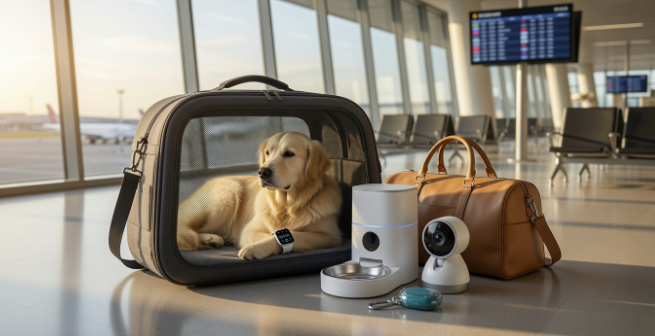
How to Travel With Your Pet Without the Stress (Complete 2026 Guide)
Pet travel falls into two categories: the kind you plan for and execute well, which is genuinely manageable, and the kind you figure out as you go, which reliably produces chaos. The difference between them is about 90 minutes of advance preparation per trip.
This guide covers everything from airline policies to road trip logistics to finding genuinely pet-friendly accommodation — organized by mode of travel and level of preparation required.
Before Any Trip: The Preparation Checklist
Microchip and ID tag — verify both are current: A pet traveling without current ID information is a pet that can get permanently lost. Check that your microchip registration is current (the microchip itself doesn’t expire, but the registration database entry does — verify at the AAHA Universal Pet Microchip Lookup tool). Confirm your pet’s ID tag has your current phone number.
Health certificate for air travel: Airlines and many destination states require a Certificate of Veterinary Inspection (CVI) issued by a licensed veterinarian within 10 days of travel. Schedule this appointment in advance — popular travel times create veterinary availability gaps.
Vaccination records: Keep digital and physical copies of current vaccination records, particularly rabies. International travel has specific vaccination requirements that vary by destination country.
Medications: If your pet takes regular medications, bring more than you need. Refilling a prescription for a specific veterinary medication in an unfamiliar city can be complicated.
Air Travel: The Detailed Reality
Cabin vs. Cargo — The Decision That Matters Most
Most airline pet policies allow small pets (under roughly 20 lbs in-carrier, though policies vary by airline) to travel in the cabin under the seat in front of you, in an airline-approved soft-sided carrier. Larger pets must travel as checked baggage in the cargo hold or as air freight.
Cabin travel is significantly safer for pets than cargo and should be used whenever the pet’s size qualifies. The primary risks of cargo travel — temperature extremes, pressure variations, rough handling, and the stress of the hold environment — are absent from cabin travel.
Cargo travel is riskier, and that risk is not evenly distributed. Snub-nosed (brachycephalic) breeds — French Bulldogs, English Bulldogs, Pugs, Persian cats — are disproportionately represented in pet travel fatalities because their compressed airways struggle with stress and temperature variation. Many airlines now ban brachycephalic breeds from cargo travel entirely; some ban them from cabin travel on long-haul flights.
If your pet must travel cargo, minimize risk by: traveling in morning or evening flights that avoid midday heat, booking direct flights only, using airlines with dedicated pet programs (Alaska Airlines and Hawaiian Airlines have the best reputations for pet cargo handling), and avoiding summer and winter travel when temperature extremes in the hold are most problematic.
Airlines by Cabin Pet Policy (2026)
Policies change frequently — always verify current rules directly with the airline before booking.
- Southwest Airlines: $125 per direction, first-come-first-served on cabin pet spots (limited per flight), soft carrier under seat
- Alaska Airlines: $100 per direction, cabin available for qualifying pets
- Delta Air Lines: $95–$200 depending on route, varies significantly by destination
- United Airlines: $125 per direction, MileagePlus members can pre-select on some routes
- American Airlines: $150 per direction, limited spots per flight
Book your pet’s cabin space at the time of your own booking — spots fill independently of seats.
Carrier Selection for Air Travel
The carrier must fit under the seat in front of you (dimensions vary by aircraft type — verify with your airline) and must provide ventilation from multiple sides. The Sleepypod Air is the most widely recommended airline-compliant carrier by frequent pet travelers: it converts between backpack and under-seat configurations and provides solid structure with appropriate ventilation.
Acclimating your pet to the carrier before travel: Put the carrier out at home 2–3 weeks before the trip. Feed meals inside it. Place familiar bedding in it. The carrier should feel like a safe, familiar space before travel day — not something that only appears on stressful occasions.
Road Trip Pet Travel
Road trips offer significantly more flexibility than air travel and can be genuinely enjoyable for most dogs given adequate preparation.
Vehicle restraint: An unrestrained dog in a vehicle is a safety hazard for both the dog and the occupants. In an accident at 30 mph, a 60-pound dog becomes a 2,700-pound projectile force. Acceptable restraint options: a properly fitted crash-tested harness connected to a seatbelt, a crate secured against movement, or a vehicle-specific barrier.
The Center for Pet Safety has crash-tested harnesses — look for their certification. Most harnesses marketed as “crash-tested” have not been independently verified.
Stopping schedule: Dogs need bathroom breaks every 2–3 hours, more frequently for puppies and seniors. Plan stops at locations where dogs are allowed off-leash in a secure area, or use rest stops with designated pet areas. Never leave a pet in a parked car — interior temperatures rise to dangerous levels within minutes even on mild days.
Signs of car sickness: Drooling, yawning, and whining often precede vomiting in car-sick dogs. Cerenia (maropitant) is a prescription medication that prevents motion sickness effectively; request it from your veterinarian before a long road trip. Keeping the dog’s eye level at or above window height reduces visual-vestibular conflict.
Finding Pet-Friendly Accommodation
“Pet-friendly” exists on a spectrum from genuinely welcoming to “we allow pets in one specific room that smells like every pet who ever stayed there.”
BringFido.com is the most comprehensive aggregator of genuinely pet-friendly hotels, vacation rentals, and restaurants, with user reviews that filter for actual pet experience rather than just policy.
Kimpton Hotels: The chain with the best corporate pet policy — no size or breed restrictions, no pet fees, water bowls and beds provided in rooms.
Airbnb and VRBO: Filter specifically for pet-friendly listings; the policies and fees vary widely, but privately owned vacation rentals often provide more genuine space and flexibility than hotel rooms.
Questions to ask when booking:
- Is there a pet fee? Is it per night or per stay?
- Are there weight or breed restrictions?
- Are pets allowed in common areas?
- Is there a designated outdoor relief area?
- Are pets allowed unattended in rooms? (Important if you plan to eat at non-pet-friendly restaurants)
Keeping Your Pet Calm During Travel
Pheromone products: Adaptil (for dogs) and Feliway (for cats) release synthetic versions of calming pheromones that reduce travel anxiety in many pets. Available as diffusers, sprays, and collar attachments. Apply to the carrier or collar 30 minutes before travel.
Familiar items: A piece of your recently worn clothing in the carrier provides olfactory comfort. Your pet’s regular bedding provides familiar scent in unfamiliar environments.
Exercise before travel: A well-exercised dog is a calmer traveler. A long walk or vigorous play session before departure reduces nervous energy during the trip.
Prescription options for anxious travelers: For dogs or cats with significant travel anxiety, your veterinarian can prescribe short-acting anxiolytics (gabapentin is commonly used for cats; trazodone or alprazolam for dogs). A trial dose administered at home before travel day allows you to assess the effect and confirm the dose is appropriate.
Related: For the GPS tracker that gives you peace of mind if your pet escapes during travel, see [Best Affordable Pet Gadgets Under $50 in 2026].