
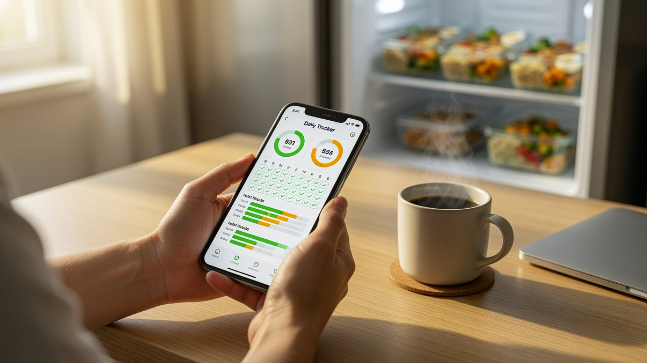
Most habit apps are good at recording what you did.
That is not the same as helping you actually do it.
You can download a tracker, create six new habits, turn on reminders and maintain a perfect streak for a week—and still end up abandoning the entire system a month later.
AI can make habit-building more useful, but not because artificial intelligence has discovered a secret formula for motivation.
Its real advantage is much simpler:
AI can help you design a habit around your actual schedule, identify why you keep failing, and adjust the system when real life gets in the way.
That makes AI most useful before and between habit repetitions—not instead of them.
This guide shows you how to use AI habit apps and general AI assistants as practical habit-building tools without turning your life into another dashboard full of notifications.
HQ Quick Trick: Do not ask AI, “How do I become more disciplined?” Give it one specific behavior, your real schedule and the exact situations where you normally fail.
What Actually Makes a Habit Stick?
Habit formation is less mysterious than much of the self-improvement industry makes it sound.
Research broadly supports a simple mechanism:
Repeated behavior in a sufficiently stable context can gradually become more automatic.
That context might be:
- A time of day
- A location
- Another behavior
- A particular situation
- A recurring environmental cue
For example:
“I want to read more”
is a goal.
But:
“After I put my phone on charge at night, I will read two pages of my book in bed”
has a specific behavior and a repeatable cue.
Research on context stability has found that performing a behavior in consistent contexts is associated with stronger automaticity and better habit repetition. (PubMed)
That is the first place AI can help.
It can turn vague goals into behaviors attached to real cues in your life.
Forget the “21 Days” Rule
There is no universal number of days after which a behavior magically becomes a habit.
Different behaviors take different amounts of time to become automatic, and people vary substantially.
A recent systematic review of health-related habit formation found considerable variation in how long automaticity takes to develop. (PubMed)
That means:
21 days is not a deadline.
Neither is 30 days.
And even the often-repeated “66 days” figure should not be treated as a guarantee.
A better question is:
Is this behavior becoming easier to start when the same cue appears?
That is much closer to what habit formation actually looks like.
What AI Can Do Better Than a Normal Habit Tracker
Traditional habit trackers usually ask:
Did you do it? Yes or no.
AI can ask a more useful question:
Why didn’t you do it, and what should change?
There are four jobs where AI is particularly useful.
1. Turn a Goal Into a Specific Behavior
Goals are usually too vague.
Examples:
- Get healthier
- Read more
- Learn Spanish
- Exercise regularly
- Sleep earlier
- Study more
AI can help convert them into actions.
Instead of:
Exercise more
you might end up with:
After closing my work laptop on Monday, Wednesday and Friday, I will put on my shoes and walk for ten minutes.
That gives you:
- A trigger
- A behavior
- A schedule
- A small starting point
2. Find the Real Friction
Sometimes the problem is not motivation.
Maybe:
- Your workout takes too long.
- Your book is in another room.
- Your study session starts when you are already exhausted.
- Your morning routine contains seven different activities.
- Your reminder arrives during a meeting.
- The habit requires preparation you keep forgetting.
AI is useful because you can describe what happened and ask it to diagnose the system rather than judge your character.
3. Design a Backup Version
A habit that only works on perfect days is fragile.
For each habit, create:
Normal version
What you do when the day goes according to plan.
Minimum version
A much smaller version you can perform when time or energy is limited.
For example:
| Habit | Normal version | Minimum version |
|---|---|---|
| Reading | 20 minutes | Read one page |
| Walking | 30 minutes | Walk for 5 minutes |
| Studying | 45 minutes | Review 5 flashcards |
| Journaling | Full entry | Write one sentence |
| Language learning | 20-minute lesson | Practice 3 words |
The minimum version is not supposed to produce the same result.
Its job is to keep the behavior easy to restart.
4. Review What Went Wrong
This is where AI becomes much more useful than another notification.
Suppose you planned to exercise three times but completed only one session.
A normal tracker shows:
1/3
An AI-assisted review can ask:
- Which session worked?
- What was different that day?
- What blocked the other sessions?
- Is the timing unrealistic?
- Is the habit too large?
- Is another cue more reliable?
Then you change the design.
That turns tracking into learning.
The HQTrick AI Habit Method
You do not need a complicated app stack.
Use this process.
Step 1: Choose One Habit
Not five.
Pick the behavior that would make the biggest useful difference right now.
Examples:
- Walk after lunch.
- Read before bed.
- Study after dinner.
- Prepare tomorrow’s priorities before finishing work.
- Practice a language during your commute.
You can add more later.
Trying to rebuild your entire life on Monday morning usually creates an impressive system that is abandoned by Friday.
Step 2: Describe Your Real Life to the AI
This is where generic habit advice becomes personalized.
Tell the AI:
- Your goal
- Your current schedule
- Where the behavior could realistically fit
- What you have tried before
- Why it failed
- How much time you can genuinely commit
Do not describe your ideal life.
Describe Tuesday.
Step 3: Use This Habit-Design Prompt
Copy this prompt into the AI assistant you already use:
I want to build the habit of [behavior].
My reason for wanting it is [reason].
My normal weekday looks like this: [brief schedule].
I have tried this before and usually stop because [obstacle].
Help me design the smallest realistic version of this habit.
Give me:
- A specific existing cue to attach it to.
- A normal version of the habit.
- A minimum version for difficult days.
- The most likely friction that could stop me.
- One environmental change that would make the habit easier.
- A recovery plan for what to do after I miss it.
Keep the system simple enough that I could follow it on a busy week.
The important part is not the wording of the prompt.
It is the context you provide.
Step 4: Turn It Into an If-Then Plan
Implementation intentions use an if-then structure:
If X happens, then I will do Y.
Research reviews have found that this type of planning can improve follow-through across many behaviors, although results naturally vary between situations and people. (PubMed)
Examples:
If I finish my morning coffee, then I will walk for ten minutes.
If I sit at my desk after lunch, then I will review five flashcards before opening social media.
If I plug my phone in for the night, then I will read one page.
Notice what is missing:
motivation.
The plan tells you when to start.
Step 5: Make the Environment Do Some of the Work
Do not use AI only to generate reminders.
Ask it:
What can I change in my environment so this behavior requires less effort to start?
This can produce better ideas than another notification.
For exercise:
- Put shoes beside the door.
- Prepare clothes the night before.
- Keep equipment visible.
For reading:
- Put the book on the pillow.
- Move the phone charger away from the bed.
For studying:
- Keep the correct document already open.
- Leave flashcards on the desk.
- Block the distracting website during the study window.
Good habit systems reduce the number of decisions you need to make.
The Best AI Tool May Be the One You Already Use
You do not necessarily need a specialized “AI habit coach.”
A general-purpose AI assistant can handle most of the thinking work:
- Habit design
- Breaking goals into smaller actions
- Identifying friction
- Creating fallback versions
- Weekly reviews
- Adjusting schedules
- Brainstorming environmental changes
That means ChatGPT, Claude, Gemini or another capable conversational AI can perform the coaching role.
The actual habit still needs somewhere to happen.
That is where other tools can help.
Use Reclaim When the Problem Is Finding Time
Some habits fail because they never get a real place on the calendar.
You intend to:
- Exercise three times this week
- Practice a language
- Read
- Take a proper lunch break
- Review finances
but meetings and tasks consume every available gap.
Reclaim’s Habits feature can schedule recurring routines inside available calendar windows and adjust them as the calendar changes. (Reclaim Help)
That makes it useful when the problem is:
“I know what I want to do, but I never know when I will have time.”
It is less useful for tiny habits that require no meaningful scheduling.
You probably do not need an AI calendar to remind you to take vitamins after breakfast.
Use advanced tools only when the problem requires them.
Use a Simple Tracker When the Problem Is Remembering
Sometimes AI is unnecessary.
If your habit is already well designed and scheduled, all you may need is a checkbox.
A simple habit tracker, calendar or paper notebook can answer:
Did I do it?
That can be enough.
In fact, a useful system might be:
AI assistant → design and troubleshoot
Calendar → create time
Simple tracker → record repetition
This is often better than searching endlessly for one app that claims to do everything.
HQ Quick Trick: Add technology only when it solves a specific failure point. More habit apps can create more habit-management work.
Use AI for a Weekly Review, Not Constant Coaching
You do not need to discuss every glass of water with an AI.
A weekly review is usually more useful.
Try this:
I’m building the habit of [habit].
My target this week was [target].
I completed it [number] times.
The days that worked were [days/situations].
The days that failed were [days/situations].
The main obstacles were [obstacles].
Analyze the pattern and suggest only one change for next week.
Do not increase the goal unless the current version is becoming consistently easy.
That last sentence matters.
AI assistants can be overly eager to optimize.
Your system should become more sustainable before it becomes more ambitious.
Do Not Increase the Habit Every Time You Succeed
Progress does not require constantly adding more.
If ten minutes of walking happens reliably, you do not automatically need to turn it into:
- 20 minutes
- Then 30
- Then 5 km
- Then a running plan
- Then a marathon
The original habit may already be doing exactly what you wanted.
AI should help you protect successful routines—not endlessly transform them into new projects.
How to Recover After Missing a Habit
Missing once is normal.
The dangerous part is the story people tell themselves afterward:
I broke the streak, so the system failed.
Instead, use the miss as data.
Ask four questions:
Was the Cue Present?
If not, choose a more reliable trigger.
Did I Have Enough Time?
If not, reduce the behavior or change its time.
Was Starting Too Difficult?
Reduce setup friction.
Did Something Unusual Happen?
Travel, illness, emergencies and abnormal workloads do not necessarily require redesigning the entire system.
This distinction prevents overreaction.
One missed day can be noise.
A repeated pattern is information.
Build a Recovery Rule in Advance
Do not wait until failure to decide what happens next.
For example:
If I miss my scheduled workout, I do the minimum version the following day instead of trying to “make up” the entire workout.
Or:
If I miss evening reading because I get home late, I restart at the normal cue the following evening.
The goal is resumption, not punishment.
AI Is Especially Useful for Morning Routines
Morning routines are a perfect example because the internet tends to prescribe the same behaviors to everyone.
Cold shower.
Meditation.
Journal.
Workout.
Reading.
Breakfast.
Planning.
Suddenly your “simple morning routine” takes 90 minutes.
AI can instead begin with your actual wake time, responsibilities and available minutes.
We have a complete guide on building a healthy morning routine using AI tools if that is the specific habit system you want to create.
The important principle is the same:
Design around the life you have, not the morning routine you saw online.
AI Can Also Help Build a Learning Habit
Learning is another area where people create vague goals:
Learn coding.
Study Spanish.
Read about investing.
AI can convert these into repeatable behaviors and provide the material for the session itself.
For example:
After lunch on weekdays, I will spend ten minutes answering five active-recall questions about the topic I am studying.
AI can then generate the questions.
Our guide on how to use AI to learn faster covers active recall, AI tutoring, practice questions and personalized learning plans in more detail.
Stress Changes Habit Systems
A habit that works during a quiet month may fail during:
- Exams
- Work deadlines
- Family problems
- Travel
- Poor sleep
- Major life changes
That does not automatically mean the habit was badly designed.
It may mean the required version is temporarily too demanding.
This is why having a minimum version and a recovery plan matters.
If stress itself is becoming the problem rather than habit design, our guide to stress and anxiety techniques with real evidence covers that separately.
AI can help simplify a routine.
It should not be used to convince you that every difficult period can be solved with better productivity.
Do Not Track Everything
The arrival of AI makes extreme self-tracking easier.
That does not automatically make it useful.
You can track:
- Sleep
- Exercise
- Mood
- Food
- Water
- Reading
- Study
- Meditation
- Screen time
- Spending
- Productivity
- Journaling
Eventually your habit becomes:
maintaining the habit system.
Track only data that helps answer a question.
For example:
Useful:
“Does exercising after work happen more consistently than exercising before work?”
Less useful:
“I need eleven graphs showing every aspect of my routine because the app can generate them.”
Data should help you make a decision.
Be Careful With Streaks
Streaks can motivate people.
They can also create a fragile all-or-nothing mindset.
If you have completed a behavior 45 times and miss once, your progress did not become zero.
The underlying repetitions still happened.
Instead of treating a streak as the goal, track something like:
12 workouts completed this month
or:
Reading happened on 80% of planned evenings
That makes the system more resistant to one imperfect day.
AI Should Not Become the Habit
There is another failure mode worth watching.
You can spend so much time:
- Designing the perfect routine
- Improving prompts
- Reviewing dashboards
- Asking AI for optimization
- Changing apps
that you never perform the behavior.
If your goal is to read, reading is the habit.
Talking to AI about reading is not.
If your goal is exercise, movement is the habit.
Optimizing the workout plan for another hour is not.
HQ Quick Trick: If managing your habit system takes longer than performing the minimum version of the habit, simplify the system.
Protect Your Privacy
Habit apps can collect surprisingly revealing information.
Your routine can expose:
- When you wake up
- When you leave home
- Health-related behaviors
- Work patterns
- Religious or personal practices
- Location patterns
- Sleep schedule
- Emotional reflections
Before giving an AI tool detailed personal information, consider whether the detail is actually necessary.
You can often say:
“I have a recurring medical appointment on Wednesday afternoon.”
without describing the medical condition.
Or:
“I have a private family obligation.”
instead of explaining it.
Give the AI enough context to solve the scheduling problem—not every detail of your life.
The 7-Day Habit Experiment
Instead of committing to a huge system, run an experiment.
Choose one habit.
Then write:
Cue:
When exactly will I start?
Normal version:
What will I normally do?
Minimum version:
What happens on a difficult day?
Environment:
What can I prepare in advance?
Tracking:
What is the simplest way to record completion?
Run this for seven days.
Do not judge whether the habit has “formed.”
Seven days is much too early for that conclusion.
You are testing whether the design works.
At the end, ask the AI:
Here was my seven-day habit experiment.
Target behavior: [behavior]
Cue: [cue]
Completed: [number]/7
Successful situations: [list]
Failed situations: [list]
Based on this information, identify the biggest source of friction and recommend one change. Keep the habit itself as small as possible.
Then run another week.
The Four-Week Review
After several weeks, review trends rather than individual misses.
Ask:
- Is starting easier?
- Is the cue reliable?
- Is the minimum version still necessary often?
- Are the same obstacles recurring?
- Does the behavior still serve the original goal?
- Is the tracking system helping?
Only then consider increasing difficulty.
Do not assume four weeks means the habit is complete.
The purpose of the review is to determine whether the system is moving in the right direction.
When You Should Remove AI From the Process
The ideal outcome may eventually be that you stop needing AI.
Imagine your routine becomes:
Finish coffee → put on shoes → walk.
You no longer need:
- A prompt
- Coaching
- Notifications
- Analysis
- Weekly optimization
That is success.
The technology helped create the system and then became unnecessary.
Habit automation should happen in your behavior, not just inside an app.
Common AI Habit-Building Mistakes
Building Too Many Habits at Once
AI makes creating complex plans dangerously easy.
Resist it.
Start with one or two behaviors.
Asking for a Perfect Routine
There is no perfect routine.
Ask for a testable starting version.
Changing the System Every Day
Habits require repetition.
If you keep changing the cue, time and behavior, you make it harder to establish a stable association.
Using Notifications as the Entire Strategy
A reminder tells you something needs doing.
It does not make the behavior easier.
Confusing Planning With Action
A beautiful plan produces no benefit until the behavior happens.
Treating a Miss as Failure
Use misses to improve the design.
Letting AI Increase the Goal Too Quickly
Consistency first.
Difficulty later.
The HQTrick Habit Stack
For most people, this is all the technology required:
| Job | Tool |
|---|---|
| Design the habit | AI assistant |
| Give it a real place in the day | Calendar |
| Protect flexible time when necessary | AI scheduler such as Reclaim |
| Record whether it happened | Simple tracker or calendar |
| Diagnose recurring problems | Weekly AI review |
Notice what is missing:
Five different habit apps.
Keep the stack as small as possible.
Frequently Asked Questions
Can AI really help build habits?
Yes, but primarily by helping with planning, personalization, troubleshooting and scheduling.
AI does not perform the repetition required for a behavior to become habitual.
What are the best AI habit apps?
The best tool depends on the problem.
A general AI assistant can help design and review habits, while an AI calendar such as Reclaim can help protect time for routines. A simple non-AI tracker may still be the best tool for recording completion.
How long does it take to form a habit?
There is no universal number.
Research shows substantial variation depending on the person, behavior, frequency and context.
Focus on repeated performance in a stable context rather than counting down to a specific day.
Should I track habits every day?
Only if tracking helps you stay consistent or learn something useful.
Once a behavior becomes stable, you may no longer need to record every repetition.
Is breaking a streak bad?
No.
One missed repetition does not erase previous progress.
The more useful question is whether you resume the behavior and whether misses reveal a recurring problem in the system.
Should I use AI reminders?
They can help if forgetting is the main problem.
If you already remember but still do not act, adding another reminder probably will not solve the underlying friction.
How many habits should I build at once?
For beginners, starting with one important habit is usually easier to troubleshoot and sustain than launching a complete lifestyle overhaul.
You can add behaviors once the existing routine becomes stable.
Can AI replace a coach or therapist?
AI can help organize goals and reflect on ordinary habit-building problems.
It is not a substitute for qualified professional support when a behavior involves a medical condition, mental-health problem, addiction or another issue requiring professional assessment.
Final Verdict
The most useful AI habit apps do not magically make you disciplined.
They help you build a better system.
Use AI to:
- Turn vague goals into specific behaviors
- Attach those behaviors to reliable cues
- Create realistic minimum versions
- Identify friction
- Schedule time when necessary
- Review patterns
- Recover after missed days
Then get the technology out of the way and perform the behavior.
If your goal is specifically to redesign your mornings, continue with our guide to building a healthy morning routine using AI.
If the habit involves studying or learning a skill, our guide to using AI to learn faster shows how to combine AI with active recall and deliberate practice.
And if stress keeps disrupting routines, start with our evidence-based stress management guide instead of adding more productivity tools.
The HQTrick rule: use AI to make the habit easier to perform—not to make the habit system more complicated.