
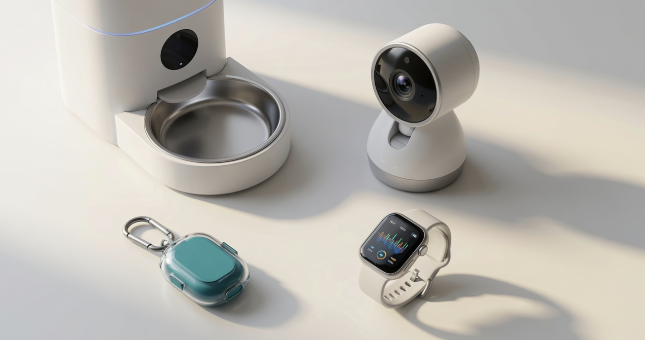
Best Affordable Pet Gadgets Under $50 in 2026 (Smart Feeders, Trackers, and More)
Pet technology has followed the same trajectory as smart home technology — the features that cost hundreds of dollars five years ago are available for under $50 today, and the quality gap between budget and premium has narrowed meaningfully. This guide covers the gadgets that have crossed the quality threshold where they’re actually worth recommending, all at prices accessible to most pet owners.
Smart Feeders: The Most Practical Pet Gadget Category
Petlibro Automatic Cat and Dog Feeder — $40
The Petlibro Air has become one of the most consistently recommended automatic feeders in 2026 for straightforward reasons: it works reliably, the app is functional without being overcomplicated, and the price is half what similar functionality cost two years ago.
What it does: Schedules up to five meals per day with portion control measured in portions (you calibrate the portion size for your pet’s specific food). Voice recording allows you to record a short message that plays at feeding time — pets often come running to the recorded voice.
What it doesn’t do: Freeze-dried or wet food (automatic feeders are for dry kibble only). Handle multiple pets at different feeding stations (you need one feeder per station).
Best for: Working owners who want consistent meal timing for a pet that tends to eat too fast or needs regulated portions. Also useful as a backup for occasional late nights.
Wopet Castle Automatic Pet Feeder — $45
Similar functionality to the Petlibro at comparable pricing, with a slightly larger capacity (6L vs 5L) that suits larger dogs eating more kibble per meal. The dual-compartment design separates food storage from the dispensing mechanism to reduce moisture and pest access.
GPS Trackers: Peace of Mind for a Reasonable Price
Whistle Go Explore — $50 (plus subscription)
The Whistle Go Explore is the most affordable GPS tracker with reliable performance. It attaches to a collar and provides real-time location through a cellular connection and GPS. The app maps your pet’s location, tracks their daily activity, and can send alerts when they leave a defined safe zone.
The honest caveat: GPS trackers require cellular subscriptions — Whistle’s runs $7–$10/month. The device cost is the entry point; the ongoing cost is the real commitment. Factor this into the total cost assessment.
Coverage: Works anywhere with cellular coverage. Accuracy within 10–30 feet in most conditions. Performance degrades in dense urban areas with tall buildings (GPS signal reflection) and in heavily forested areas.
Best for: Dogs that have escaped before, dogs in large outdoor properties, or high-anxiety owners whose peace of mind has genuine value.
Pet Cameras: Separation Anxiety for Both Parties
Wyze Pet Camera — $36
Already covered in the Home Improvement series as a general-purpose indoor camera, the Wyze Cam v4 performs equally well as a pet camera. Motion detection, two-way audio, night vision, and 2K video for $36 — the price-to-performance ratio is unmatched in this category.
Pet-specific use case: Check on your pet during the day, speak to them through the two-way audio when they appear anxious, watch for behavior that indicates they’re not coping well with alone time.
Furbo 360° Dog Camera — $48 (frequently on sale)
Purpose-built for dog monitoring with a rotating lens that follows movement, a treat dispenser triggered remotely, barking detection with phone alerts, and two-way audio. The rotating feature means coverage of a full room without manually adjusting the camera.
The treat dispenser is genuinely popular with dogs and provides a way to interact with them remotely that goes beyond passive viewing.
Activity Monitors: Fitness Tracking for Your Pet
PetPace Collar — $35 + subscription
PetPace monitors heart rate, respiration, temperature, pulse, and activity levels, transmitting data to an app and flagging anomalies. Designed with veterinary input to catch early signs of health changes before they become apparent.
The realistic use case: Most valuable for senior dogs or dogs with known health conditions where early warning of changes has meaningful clinical value. For healthy young dogs, the data is interesting but rarely actionable.
Water Fountains: Hydration Infrastructure
PetSafe Drinkwell Pagoda Fountain — $40
Cats and dogs often prefer running water to still water in a bowl. A circulating fountain maintains freshness, encourages higher water intake (meaningful for cats given their low thirst drive), and filters debris.
The Pagoda’s ceramic construction is easier to clean than plastic alternatives and doesn’t harbor bacteria in scratches the way plastic does. The dual-stream design produces gentle circulation that most cats find appealing.
Maintenance reality: Fountains require weekly cleaning and filter replacement every 2–4 weeks. Factor this into your assessment of whether the ongoing maintenance suits your routine.
What’s Not Worth Buying at This Price Point
Laser pointer automatic toys: Cats engage initially and then develop frustration-based behavior from a prey sequence that never resolves (they can’t catch the laser). Physical toys that cats can actually catch are better for behavioral health.
Ultrasonic bark deterrents: Inconsistent effectiveness in research, and the mechanism (aversive sound) suppresses barking without addressing the underlying cause. Better solutions exist for problem barking.
Generic “smart” collar lights: Useful for nighttime visibility, but the “smart” features on budget versions don’t deliver meaningful functionality above a $8 LED collar attachment.
Building a pet-friendly smart home? Read [Best Smart Home Devices Under $100] for the broader home tech context these pet gadgets fit into.