
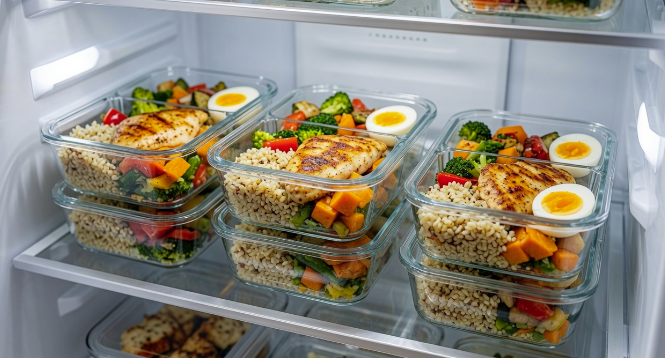
Meal Prep for Beginners: How to Eat Healthy When You’re Always Busy
The reason most people don’t eat as well as they intend to isn’t a knowledge problem. It’s a logistics problem. At 7pm on a Tuesday after a long day, the gap between knowing that a grilled chicken salad is healthier than delivery and actually making one is wider than any amount of nutritional education can bridge. Convenience wins at decision fatigue.
Meal prep collapses that gap by moving the decision and effort to a moment when you have time and energy — the weekend — and making the healthy option the convenient option for the rest of the week.
This guide is a practical, beginner-appropriate system for making it work.
What Meal Prep Is Not
It is not cooking seventeen identical containers of bland chicken and rice. That image — the bodybuilding-forum version of meal prep — is what puts most people off the concept before they’ve tried it.
Effective meal prep for most people is closer to: cooking a few core components that combine in different ways throughout the week, producing meals that are nutritious and convenient without being repetitive or joyless.
The Component Method (Better Than Full Meal Prep)
Instead of preparing complete meals, prepare components. The components become building blocks for varied meals throughout the week.
The four component categories:
Protein source: Grilled or baked chicken thighs, hard-boiled eggs, canned or baked salmon, cooked ground turkey, baked tofu.
Complex carbohydrate: Brown rice, quinoa, roasted sweet potato, cooked farro, pasta.
Roasted vegetables: Sheet-pan roasted broccoli, cauliflower, Brussels sprouts, zucchini, bell peppers — whatever is in season.
Flavor base: A sauce or dressing that ties everything together — tahini dressing, pesto, chimichurri, or a simple vinaigrette.
With these four components in the refrigerator, a meal assembly takes under five minutes. Monday’s lunch might be chicken, rice, roasted broccoli, and tahini. Wednesday’s is chicken, quinoa, bell peppers, and pesto. Thursday’s is an egg salad wrap using the hard-boiled eggs. The components are the same; the combinations vary.
The Two-Hour Sunday Prep Session
This is the specific workflow that produces a week’s worth of meal components in about two hours.
Before you start: the mise en place principle
Take everything out of the refrigerator and pantry. Wash and chop all vegetables before cooking begins. Set out all pans, measuring cups, and storage containers. The prep itself goes significantly faster when everything is organized before the heat goes on.
The parallel cooking sequence (maximize oven and stovetop use simultaneously):
0:00 — Oven on, first sheet pan in Toss chopped vegetables in olive oil, salt, pepper. Spread on a sheet pan. Into the oven at 400°F (200°C). Total time: 25–30 minutes.
0:05 — Rice or grain on the stovetop Start a pot of rice, quinoa, or farro. Brown rice: 45 minutes. Quinoa: 15 minutes. Farro: 30 minutes. These cook unattended.
0:10 — Second sheet pan (protein) Season chicken thighs or sweet potatoes. Into a second oven rack. Chicken at 400°F takes 25–30 minutes; sweet potatoes take 35–40 minutes.
0:12 — Hard boil eggs Cold water, eggs in, bring to boil, 10 minutes, ice bath. These cook simultaneously with everything else.
0:30 — First sheet pan comes out Check vegetables, remove if done. Put a second batch in if needed.
0:45 — Protein done Pull the chicken or sweet potatoes.
0:55 — Grain done Fluff and cool.
1:00 — Assemble sauce or dressing 5 minutes with a jar and a fork.
1:05–1:30 — Cool and store Everything needs to reach room temperature before refrigerating (hot food in sealed containers creates condensation that accelerates spoilage). While food cools, clean up the kitchen. Pack into containers by component, not by meal.
Total active cooking time: approximately 45 minutes. Total elapsed time including cooling: 90–120 minutes.
Storage and Shelf Life
Glass vs. plastic containers: Glass is better for food that will be reheated — it doesn’t leach chemicals at high temperatures and cleans completely. Plastic is fine for cold items like salad components and sauces. The Pyrex 18-piece storage set remains the most practical entry point for most beginners.
Shelf life of prepped components:
- Cooked chicken: 4 days refrigerated
- Cooked grains: 5–6 days
- Roasted vegetables: 4–5 days
- Hard-boiled eggs (unpeeled): 7 days; peeled: 5 days
- Sauces and dressings: 5–7 days depending on ingredients
For longer storage, cooked proteins and grains freeze well. Batch cook a large quantity of rice or chicken once every two weeks and freeze individual portions.
The Beginner Starter Grocery List
This is a low-variety, high-practicality list designed for someone doing their first prep session:
Proteins:
- 2 lbs chicken thighs (bone-in, skin-on; cheaper and more flavorful than breast)
- 1 dozen eggs
Carbohydrates:
- 2 cups brown rice (dry)
- 2 sweet potatoes
Vegetables:
- 1 head of broccoli
- 1 bag Brussels sprouts or cauliflower
- 1 bag of salad greens (no-prep option for weeknight salads)
Pantry (keep these on hand always):
- Olive oil, salt, pepper, garlic powder
- Canned beans (chickpeas, black beans) — no-prep protein add-in
- Tahini or pesto for sauce
Total cost: Approximately $35–$50 depending on location and store. Feeds 4–5 lunches and dinners for one person, or 2–3 days for two people.
The Nutrition Foundation: What Actually Matters
Meal prep is a vehicle for improving nutritional quality, and the principles behind a healthy diet are less complicated than the wellness industry suggests:
Eat mostly whole foods. Foods with one ingredient — chicken, rice, broccoli, eggs, lentils — form the backbone of healthy eating. The more processing a food undergoes, the more likely it is to be lower in nutrients and higher in things that don’t serve your health.
Hit your protein target. Aim for 0.7–1.0 grams of protein per pound of bodyweight. This is the most important dietary variable for body composition, satiety, and maintaining muscle mass. Most people who aren’t intentional about protein consistently under-eat it.
Eat vegetables at most meals. The research on vegetable consumption and health outcomes is among the most consistent in nutritional science. Volume, variety, and color are the guidelines — not counting specific nutrients.
Manage processed food rather than eliminating it. Perfectionism in eating produces anxiety, unsustainable restriction, and often rebound. A diet that is 80–85% whole food leaves room for enjoyment without compromising meaningful health outcomes.
When Meal Prep Still Doesn’t Happen
Life intervenes. Some weeks the prep session doesn’t happen and by Wednesday the refrigerator is empty. The backup strategy matters:
Tier 1 fallback (5 minutes): Canned fish (salmon, sardines, tuna), pre-washed salad greens, canned beans, and olive oil. Not exciting; completely nutritious.
Tier 2 fallback (15 minutes): Frozen vegetables (nutritionally equivalent to fresh), eggs, and any grain. Eggs and frozen vegetables are a nutritionally solid meal at any hour.
Tier 3 fallback (delivery): When delivery is genuinely necessary, ordering from Thai, Japanese, or Mediterranean restaurants tends to produce better nutritional outcomes than fast food — more vegetables, more whole proteins, better fat profiles.