
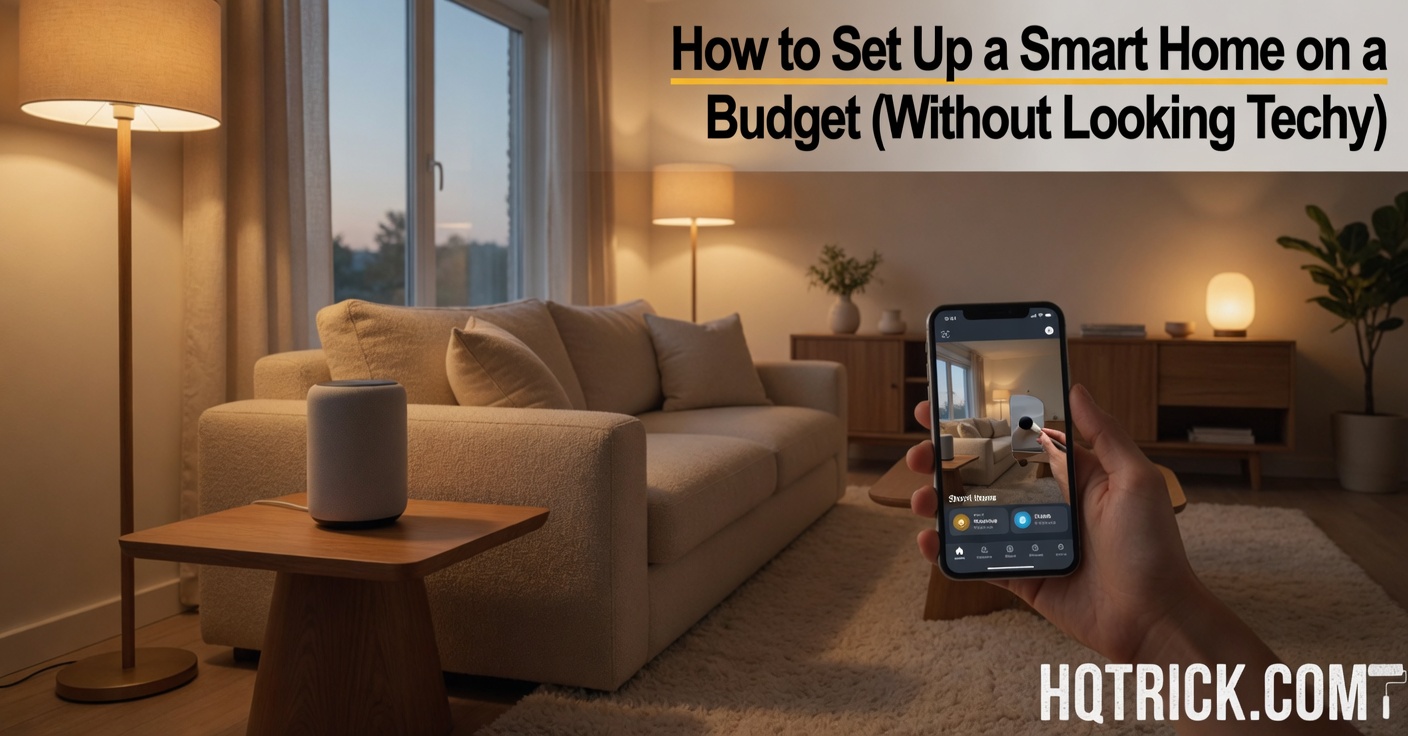
Best Smart Home Devices Under $100 in 2026 (Actually Useful Ones)
The smart home category has a problem that most review sites won’t acknowledge: a significant percentage of the devices sold are solving problems nobody actually has. Voice-controlled toilet paper dispensers. App-enabled coffee makers. Refrigerators with internal cameras for checking your groceries while grocery shopping.
This guide is different. Every device here earns its place by solving a real, recurring inconvenience in the way you live at home. The test question for inclusion: would a reasonable person notice the improvement within a week of installation? If the answer wasn’t clearly yes, the device didn’t make the list.
Everything here is under $100 — and several of the most impactful picks are under $30.
How to Build a Smart Home Without Wasting Money
Before the list, one principle worth internalizing: the smart home devices with the highest practical value are almost never the flashiest ones.
The devices that genuinely improve daily life tend to do one small thing invisibly well — adjust your thermostat before you wake up, turn off lights you forgot about, let you know a package arrived. The devices that get relegated to a drawer within six months are the ones that require active effort, app management, or ritual to deliver their benefit.
The smart home hierarchy of needs (most practical first):
- Climate control automation (thermostat)
- Lighting automation and convenience
- Security awareness (cameras, doorbells)
- Voice control for common tasks
- Energy monitoring
- Everything else
Build in roughly this order and you’ll use everything you buy. Jump straight to category five with nothing in place for the first four and you’ll have an expensive gadget collection that mostly collects dust.
The 17 Best Smart Home Devices Under $100 in 2026
Smart Thermostats
Amazon Smart Thermostat — $60
The most cost-effective smart thermostat available in 2026. Works with Alexa, learns your schedule over the first few weeks, and adjusts temperature automatically when you leave and return. The energy savings are genuine: the EPA estimates smart thermostat users save an average of 8% on heating and cooling bills annually.
Installation takes 30–45 minutes if you have a conventional HVAC system and are comfortable with basic wiring. If you’ve never looked at thermostat wiring, it’s still manageable — but watch a walkthrough video first.
Ecobee Essential — $99
The step up from the Amazon thermostat. Ecobee’s occupancy sensor approach (room sensors detect where you actually are in the house, not just whether anyone is home) produces more precise temperature management. The savings calculation over a typical year typically covers the device cost within 12–18 months.
Smart Lighting
Philips Hue White Smart Bulbs (4-pack) — $55
Smart bulbs are the easiest smart home entry point: unscrew, screw in, download the app. No wiring, no hub required for basic functionality with the newer Bluetooth-capable versions.
The practical case for smart bulbs isn’t the million-color options or the elaborate “scenes” — it’s the scheduling. Lights that turn on automatically at sunset, dim to a warm tone after 9pm, and shut off entirely at 11pm (or whenever you set) mean you never walk into a dark house and never go to bed having left lights on.
The use case people don’t consider until they have it: Setting a gradual sunrise alarm — your bedroom lights slowly brighten starting 20 minutes before your alarm, making waking significantly easier, especially in winter months.
Kasa Smart Plug (2-pack) — $17
Not technically a lighting device, but smart plugs connected to floor lamps or string lights accomplish 80% of what expensive smart bulb setups deliver at a fraction of the cost. Plug in, name the device in the app, add it to a schedule. Done.
The Kasa brand consistently earns top marks for reliability and has a clean app that works without creating an account first — a detail that sounds minor but matters once you’ve used three other smart home apps that required email registration, verification, profile completion, and tutorial dismissal before doing anything useful.
Lutron Caséta Smart Dimmer Switch (single) — $60
Smart switches are more expensive than smart bulbs and require basic electrical work (turning off the breaker and swapping a switch, which is genuinely manageable for most people). The advantage: every bulb on that circuit becomes “smart” — including cheap non-smart bulbs — and you retain physical switch functionality exactly as before.
For rooms where you use a lot of bulbs or regularly use the physical switch, a smart dimmer switch often makes more sense than smart bulbs.
Smart Security
Ring Video Doorbell (Wired) — $65
Video doorbells have moved from novelty to practical standard. The Ring Wired is the most reliable in its price range: clear 1080p video, two-way audio, motion detection with adjustable zones, and instant phone alerts when someone approaches your door.
The practical daily benefit isn’t primarily security — it’s convenience. You can see package deliveries without getting up, confirm who rang the bell before opening the door, and have a record if anything is taken from your porch. The security aspect is real but secondary to the daily convenience for most users.
Requires existing wired doorbell power (most homes have this) or a battery version at $10 more.
Wyze Cam v4 Indoor — $36
The best value security camera in 2026. 2.5K video quality, two-way audio, color night vision, and local storage via microSD card — all for $36. No mandatory subscription for basic functionality (unlike many competitors that have moved core features behind paywalls).
Common use cases beyond security: monitoring pets, checking on elderly family members, watching kids’ rooms from another part of the house.
Wyze Cam Outdoor v2 — $50
The outdoor version of the above. Battery-powered, weatherproof, and includes motion detection with a spotlight. For monitoring a driveway, backyard, or side gate without running power to the location.
Smart Speakers and Displays
Amazon Echo Dot (5th Gen) — $50
Voice control for a kitchen timer while your hands are covered in flour. Playing music without finding your phone. Getting weather before leaving the house. Adding things to a shopping list by saying them aloud. Checking traffic.
None of these uses are revolutionary. Collectively, they remove a dozen small frictions from a daily morning routine that add up to more time and less frustration. The Echo Dot earns its place through consistent, invisible usefulness.
Google Nest Mini — $50
The Google alternative to the Echo Dot. The choice between the two largely comes down to your broader ecosystem: if you use Google Calendar, Google Shopping Lists, Google Assistant on your phone, the Nest Mini integrates more seamlessly. If you use Alexa on other devices or have an Amazon smart home setup, stick with Echo.
Smart Plugs and Power Strips
Kasa Smart Power Strip (3 outlets + 3 USB) — $35
A power strip that lets you control individual outlets through an app — useful for home office setups where you want to cut power to everything except essential devices overnight, or monitor energy usage by device.
TP-Link Kasa Smart Plug Mini (4-pack) — $26
Compact smart plugs that don’t block adjacent outlets (a problem with many cheap alternatives). Use them for: floor lamps, holiday lights on a schedule, window AC units, coffee makers, humidifiers — anything you want on a timer or remote control.
Smart Sensors
Govee Smart Hygrometer and Thermometer — $16
A small sensor that tracks temperature and humidity in any room and sends alerts when values go outside set ranges. Practically useful for: baby rooms, basements prone to moisture, wine storage, musical instruments sensitive to humidity. The Govee app is well-designed and doesn’t require a subscription.
Amazon Echo Flex with Motion Sensor — $25 (bundle)
A plug-in smart speaker add-on with a motion sensor. When motion is detected, it can trigger lights, announce arrivals, or trigger any compatible Alexa routine. Useful for: automatically lighting a hallway when you walk through at night, starting a routine when you enter a room.
Water Leak Sensor (various brands) — $12–$20 per sensor
The most underrated smart home device on this list. A water leak sensor placed under your kitchen sink, behind your washing machine, near your water heater, and under your dishwasher costs $15 each and sends an immediate phone alert when it detects moisture.
A single undetected slow leak can cause thousands of dollars in water damage before you notice it. The ROI on leak sensors is better than almost any other smart home device — not because you’ll use them often, but because when you need them, you really need them.
Smart Home Hubs and Platforms
Amazon Echo Show 5 (3rd Gen) — $90
A small smart display that lives on a kitchen counter or nightstand. Unlike a smart speaker, it shows you visual information: the weather forecast, your calendar for the day, a timer countdown, photos, recipes with step-by-step instructions while you cook.
The practical test: if you find yourself checking your phone for kitchen timers, recipes, and the weather in the morning, the Echo Show 5 moves those interactions to a dedicated screen that doesn’t pull you into your notification feed.
Building a System, Not a Collection
The devices above are useful individually, but they become significantly more powerful when connected through a single platform (Alexa, Google Home, or Apple HomeKit) and organized into routines.
A simple example routine: “Goodnight” — triggered by voice or a scheduled time — turns off all lights, locks the smart lock if you have one, lowers the thermostat by 3 degrees, and plays white noise. One command replaces five separate actions.
Building even two or three of these routines — Morning, Goodnight, Leave, Arrive — makes a smart home feel genuinely effortless rather than another technology system requiring management.
What to Skip (At This Price Point)
Smart kitchen appliances: Smart coffee makers, smart toasters, smart microwaves. The app control adds complexity with essentially no practical benefit over pressing a button.
Smart blinds under $100: The reliable ones start at $150+ per blind. Budget smart blinds have poor reliability and short motor lifespans.
Smart locks as a first purchase: Useful devices, but require careful installation and battery management. Get your lighting and thermostat automation working first.