
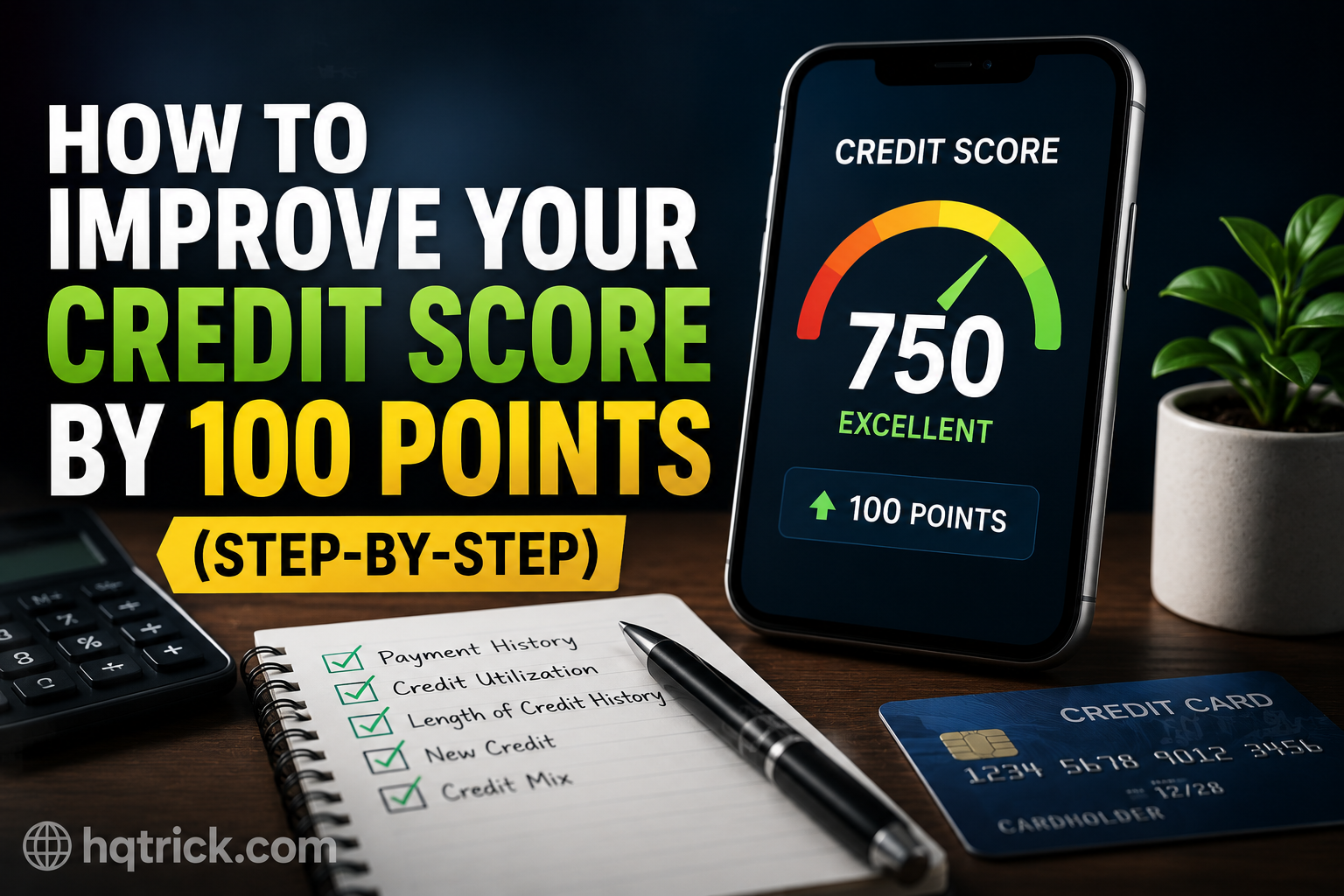
How to Improve Your Credit Score by 100 Points (Step-by-Step)
A 100-point credit score improvement is not a trick — it’s the predictable result of specific actions taken consistently. Here’s exactly what to do.
What Actually Moves Your Score
FICO scores are calculated from five factors:
- Payment history: 35% (biggest factor — late payments hurt significantly)
- Credit utilization: 30% (how much of available credit you’re using)
- Length of credit history: 15% (older accounts help)
- Credit mix: 10% (having different types of credit)
- New credit: 10% (applying for many accounts hurts temporarily)
Most 100-point improvements come from fixing payment history issues and reducing utilization. Everything else is secondary.
The Fastest Wins (Implement in Week 1)
Lower credit utilization below 30%. If you have a $10,000 limit and carry a $4,000 balance, you’re at 40% utilization — actively hurting your score. Pay it to under $3,000 and your score rises within 30 days. Under 10% is optimal.
Can’t pay it down? Request a credit limit increase. If approved, utilization drops immediately with no extra payment.
Dispute errors on your credit report. Get your free report at AnnualCreditReport.com. Errors appear in approximately 25% of reports — incorrect late payments, accounts that aren’t yours, debts already paid. Dispute errors directly with the bureau. Errors that can’t be verified must be removed within 30 days.
Set up autopay for every account. One missed payment drops your score 50–100 points. Autopay for minimums eliminates this risk. Pay more manually — never less than the minimum.
Medium-Term Actions (Months 2–6)
Become an authorized user. If a family member with excellent credit adds you as an authorized user on their oldest card, that account’s history appears on your report. You don’t need to use the card. This immediately improves your average account age and utilization.
Keep old accounts open. Closing a credit card you don’t use hurts your score by reducing available credit (raising utilization) and potentially shortening account age. Unless the card has unjustifiable annual fees, keep it open with occasional small purchases.
Add Experian Boost. This free service adds on-time utility, phone, and streaming payments to your Experian credit file — payments you’re already making that don’t normally appear on credit reports. Average boost: 13 points.
Longer-Term Rebuild (Months 6–12)
Credit builder loan. If you have thin credit history, a credit builder loan from a credit union or Self (an online credit builder) establishes payment history. You make monthly payments, they’re reported to bureaus, and you receive the accumulated amount at the end.
One strategic new card application. A new card increases total available credit, lowering utilization. Apply for one card appropriate to your current score — applying for multiple cards at once triggers multiple hard inquiries that temporarily lower your score.
Realistic Timeline
- Utilization reduction + error disputes: 1–3 months, 20–60 points
- Consistent on-time payments: 6 months, 30–50 additional points
- Account age improvements: 12+ months, 20–30 additional points
100 points in 6–12 months is realistic for most people starting in the mid-500s to low 600s.